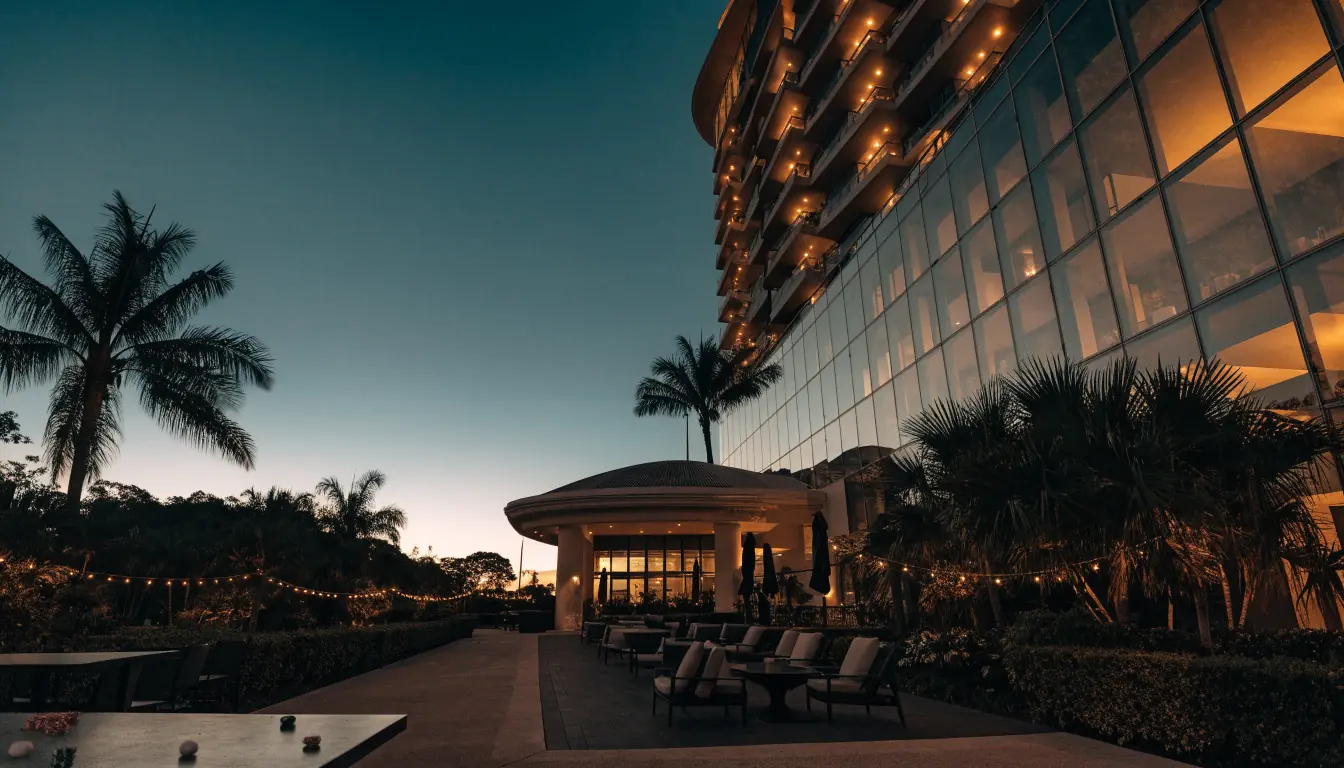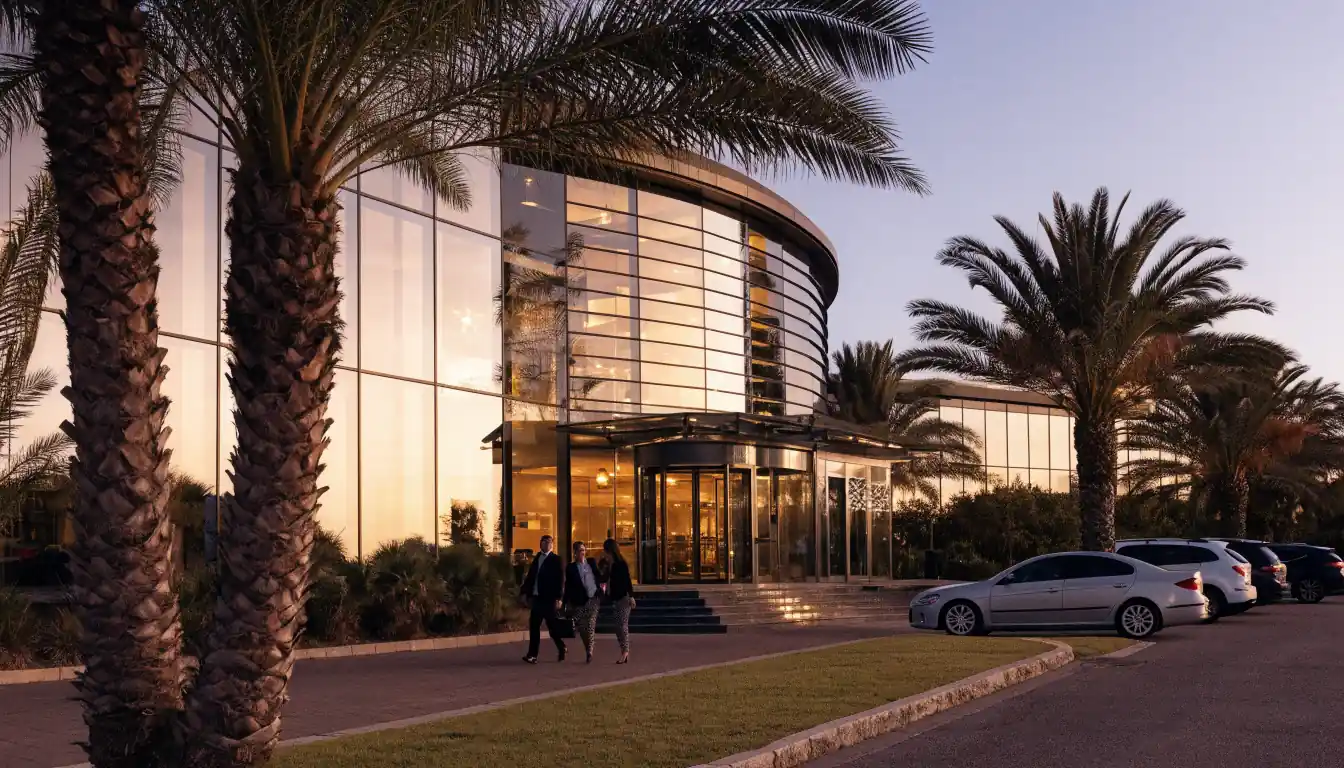
Accommodation listings can describe a shared property, a booking relationship, or simply a hotel nearby; those distinctions affect what a stay includes.
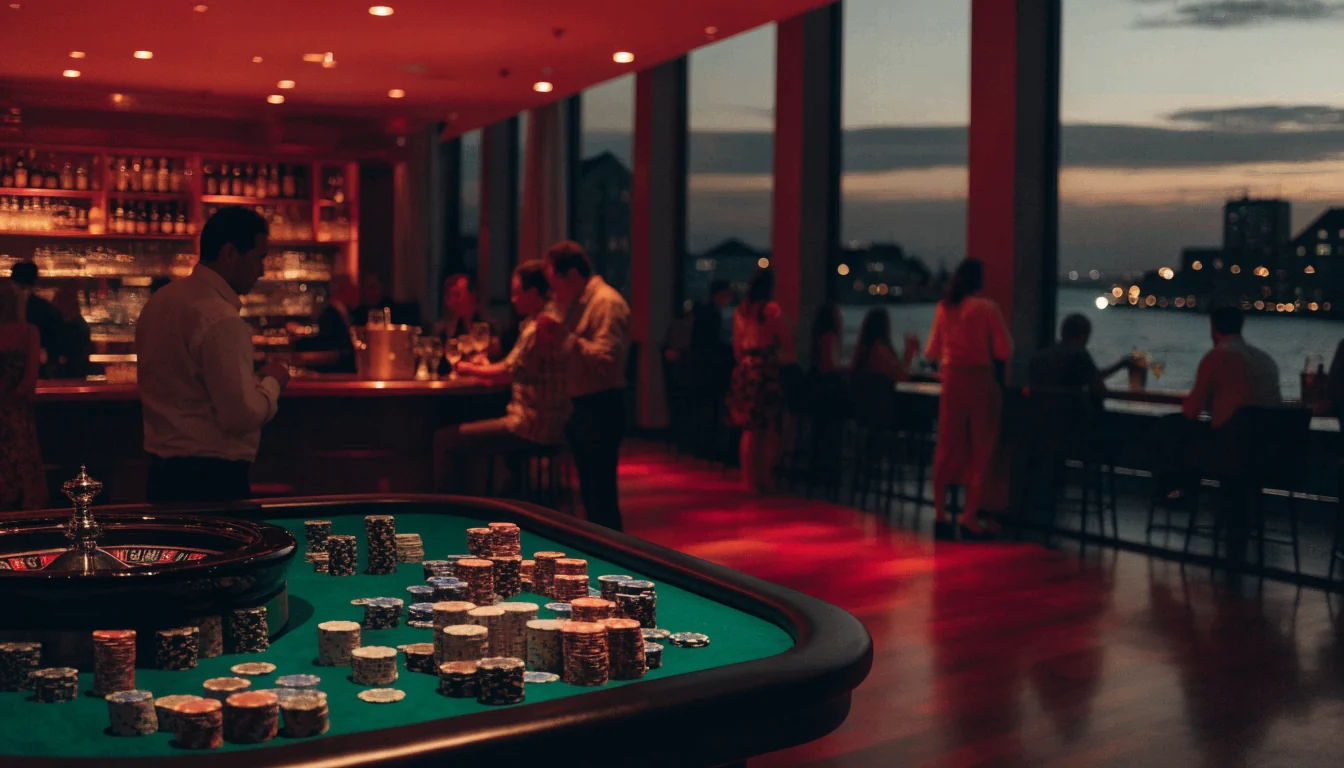
A casino hotel is not simply a hotel located in the same town as a casino. The term can imply that accommodation is operated by the casino, forms part of the same property, or is marketed through a shared booking arrangement. Those relationships are distinct from proximity. A hotel nearby may be an independent business, with separate reservations, room policies and services, even when its location makes it relevant to a casino visit.
For Tasmania, the distinction matters when interpreting descriptions such as “casino hotel” or “hotel near a casino”. The first suggests an operational or property connection that should be established through the accommodation provider’s own information. The second describes location, but does not establish that the hotel is affiliated with a casino or that a stay includes any casino-related benefit. A shared place name, promotional photograph or map result would not, by itself, demonstrate such a connection.
Room information should also be treated as property-specific. A general hotel listing does not establish which room types are available, whether particular facilities are included, or what conditions apply to a reservation. Those details can vary by date and by booking channel. A description of a property as suitable for a casino stay is not evidence of a special room category or an arrangement with a casino.
Choosing a casino for Tasmania in 2026 calls for attention to practical details that can be checked, such as payment terms and licensing information. Use this list as a concise reference when considering your options.
Kingmaker
Kingmaker lists crypto payouts at around 90 minutes and fiat payouts at 1–5 days. The minimum deposit is A$30.
LevelUp Casino
LevelUp Casino lists a Curacao eGaming licence, OGL/2023/174/0082, held by Dama N.V. Its minimum deposit is A$15.
SkyCrown
SkyCrown lists a Tobique Gaming Commission licence and crypto payouts of around 10–15 minutes; fiat payouts are listed at 1–5 days. The minimum deposit is A$30.
Bizzo Casino
Bizzo Casino lists a Curacao Gaming Control Board licence, with TechSolutions Group N.V. identified as the licensee.
GoldenCrown
GoldenCrown lists a Curacao Gaming Control Board licence, OGL/2023/176/0095, held by Hollycorn N.V.
SpinsUp
SpinsUp lists a Curacao Gaming Control Board licence, OGL/2023/174/0082, held by Dama N.V.
Golden Pokies
Golden Pokies lists Curacao as its licensing jurisdiction.
Uptown Pokies
Uptown Pokies lists a Curacao licence and says it has been operating since 2017. The minimum deposit is A$20.
Rollero Casino
Rollero Casino lists a Curacao Gaming Control Board licence, OGL/2023/176/0095, held by Hollycorn N.V.
MrPacho
MrPacho lists crypto payouts at 30–120 minutes and fiat payouts at 24–72 hours. The minimum deposit is A$30.
The same distinction applies to advertised deals. A package may combine accommodation with other services, or it may refer only to a hotel’s own rate. The word “casino” in a promotion does not establish who provides each element, whether a casino benefit is included, or what restrictions govern the offer. Terms, availability and cancellation conditions belong to the specific booking, rather than being inferred from a general label.
A useful classification therefore separates three claims: that a hotel exists, that it is near a casino, and that it is operated by or formally connected to one. Each requires its own supporting detail. Without that separation, a list of hotels in Tasmania can easily be mistaken for a list of casino hotels, while a casino’s presence in a destination can be taken to imply a lodging service that has not been demonstrated.
Opening hours require similar care. A hotel’s reception or guest-access arrangements are not necessarily the same as the operating hours of a casino floor. Nor does a hotel’s continuous accommodation service imply that casino facilities are open at all times. These are separate operating questions and should not be merged into a single claim about “casino hours”. Any time-sensitive statement needs to identify the facility and the relevant date or period; a hotel listing cannot establish casino opening times.
For anyone comparing accommodation for a casino visit, the relevant evidence would include the property’s own description of its location and ownership, the booking terms, and any explicit statement of a formal casino connection. Those details help distinguish an on-site stay from a separate hotel chosen for convenience. They also prevent assumptions about room availability, bundled benefits or access from being presented as established features.
The phrase “best casino in Tasmania” does not resolve any of these accommodation questions. A ranking of casinos, even where one is available, would not establish that the venue operates a hotel, that rooms can be booked through it, or that a nearby property is part of the same business. Accommodation should be evaluated as a separate service, with its own provider and terms. No reliable comparison of Tasmania casino hotel rooms or deals can be made from a casino label alone.
Poker rooms, poker tournaments and gyms are separate venue features. The presence of one cannot establish that a casino offers the others, and a reference to “rooms” may mean accommodation rather than a dedicated place to play poker. These distinctions matter when interpreting descriptions of a casino in Tasmania: a poker table, a scheduled tournament and a gym are different facilities or activities, each requiring its own confirmation.
Poker also has more than one meaning in gambling discussions. Live poker is a table game in which participants play against one another under the rules of the game. Pokies, by contrast, are Electronic Gaming Machines (EGMs) that produce outcomes through a Random Number Generator (RNG). A spin is independent of previous spins; the RNG does not keep a record that makes a later result more likely because earlier spins lost or won. Poker-room and tournament information therefore cannot be inferred from descriptions of pokies or their mechanics.
Tournament details, where a venue offers them, are operational rather than general casino information. A meaningful listing would identify the event format, registration arrangements, schedule, eligibility conditions and whether the event is actually taking place. Without such details, a general reference to poker does not establish that a tournament is available on a particular date. Likewise, “open today” or “open now” is time-sensitive: a venue’s general existence would not confirm that a particular facility or event is operating at that moment.
Online poker requires a separate legal distinction. Under the Interactive Gambling Act 2001, operators based in Australia cannot provide real-money online casino games, including poker, to people located in Australia. The restriction concerns the service offered by the operator; it should not be confused with a claim that a physical poker room exists in Tasmania. Offshore online casino services are not regulated under Australian law, and Australian players do not receive the protections of a locally regulated online-casino market. Casino-style online play should not be presented as a lawful Australian alternative to an in-person venue.
The word “poker” can also lead to confusion between table games and online pokies. The latter are not poker games merely because “poker” appears in the name of the machine category. Their outcomes are generated independently on each spin, and a past sequence does not alter the next result. RTP, when stated for a pokie, describes a theoretical return across a very large number of plays; it is not a forecast for an individual session or a particular player.
Gym access is another independent question. A casino’s gaming facilities do not, by themselves, establish the presence of a fitness room, membership arrangements or access for hotel guests. Those details need to be stated separately from poker facilities and cannot be inferred from a venue’s name or general description. The same applies to a sports bar: it is a distinct amenity, not evidence of a poker room, tournament schedule or gym.
For gambling involving poker machines, venues must check identification, and legal consequences may apply when requirements are not met. Gambling should not be treated as a way to recover losses: increasing bets after losing does not change the independence of future outcomes. A session budget should be set according to available bankroll, with losses accepted rather than chased. These principles apply independently of whether play takes place near a poker table, a tournament or other casino facilities.
Parking and bingo are practical, venue-specific questions, but they cannot be answered reliably through general claims about casinos in Tasmania. Availability, access arrangements and any fees depend on the individual venue. The same applies to claims about free parking or valet service: neither should be assumed without current information from the venue itself. Bingo should also be treated as a separate on-site activity, not as evidence that a casino offers a particular facility or schedule.
The same distinction matters when considering dining in Tasmania. A search for a casino’s food options does not establish which services are available at a particular location. Parking, bingo and dining need to be checked as separate venue details rather than inferred from the word “casino”.
Online access raises a different issue. Under the Interactive Gambling Act 2001, operators based in Australia cannot provide real-money online casino games—including pokies, blackjack and roulette—to people in Australia. An Australian-run online casino therefore cannot lawfully offer those services to players located in the country. This restriction concerns the operator and the service, rather than making a land-based casino’s facilities interchangeable with online gambling.
Offshore platforms occupy a different legal position. It is technically not illegal for an Australian player to use one, and real-money play may be technically possible where an offshore jurisdiction licenses the casino. That does not make the platform regulated under Australian law or provide the protections of a domestic online-casino licence. The distinction is important: legality for a player is not the same as lawful provision of the service in Australia. Online casino-style games remain prohibited for operators serving customers in Australia.
Access can also be limited in practice. A site may be unavailable or restrict services based on location, independently of whether a player can reach its web pages. A VPN used to access a region-blocked pokies site may breach the site’s terms of service and can lead to account suspension; it does not change the Australian legal framework or create Australian regulatory protection.
These points do not establish whether any particular Tasmanian venue offers bingo, parking, valet parking or dining, nor do they identify a “best casino” on those grounds. Such assessments require current, venue-specific information. Online access should not be treated as a substitute for confirming on-site facilities, and an offshore platform should not be presented as an Australian-regulated casino option.
Gambling outcomes are uncertain, and online pokies do not provide a reliable means of meeting ordinary expenses. Chasing losses or increasing stakes to recover them can deepen financial harm; any gambling activity should remain within a pre-set session budget and stop when that budget is reached.
Accommodation near a casino and accommodation sold as part of a casino stay are not interchangeable descriptions. “Near” is a geographical claim: it concerns the relationship between a lodging property and the venue. A casino stay, by contrast, can imply that rooms are operated by the casino or included in a package arranged through it. The wording alone does not establish either arrangement.
This distinction matters when comparing prices and conditions. A nearby property may be independently operated, with its own booking rules, cancellation terms and inclusions. A room promoted alongside casino access may still be supplied by a separate hotel, while a package may bundle services under particular conditions. Neither proximity nor promotional wording, by itself, confirms who operates the accommodation or what the booking includes.
Distance is also not a complete measure of convenience. The route between a lodging address and a venue can differ from the straight-line distance, and travel arrangements may affect how practical a stay is. Without a confirmed property and route, claims about walking distance, transfers or journey time would be unreliable. Location descriptions are most useful when they identify the actual property and the basis for the stated proximity.
The phrase “accommodation deals” can refer to different kinds of offers, including a reduced room rate or a package with additional inclusions. A promotion’s headline does not establish its total cost, availability or conditions. Those details depend on the specific offer and booking terms. A casino promotion should not be taken as evidence that a room is included, that a property is casino-operated, or that a price applies across all dates.
For a stay connected with a casino visit, the relevant comparison is therefore between the lodging arrangement and the venue itself: whether the property is independently booked, what the stated rate covers, and whether any advertised connection is a genuine package or merely a description of proximity. These distinctions prevent a nearby hotel from being mistaken for a casino hotel and a promotional label from being read as a guaranteed accommodation benefit.
The same caution applies to broad descriptions such as “casino accommodation”. The phrase can refer to lodging associated with a venue, accommodation in its surrounding area, or a package marketed for casino visitors. It does not, on its own, specify the location, provider, room type or terms. Any comparison depends on a named property and a clearly stated offer; otherwise, the label conveys no dependable booking detail.
A casino contact number is useful only when it is tied to the correct venue or operating business. Search results can combine similarly named properties, third-party listings and outdated records. A phone number presented without a clear venue name or official source should not be treated as confirmation that it reaches a casino in Tasmania. The same distinction applies to maps: a pin or business label is not, by itself, evidence of a venue’s address or current operating status.
Contact information also serves different purposes. General enquiries, event bookings and operational questions may be handled through separate channels, where those channels exist. A listing that supplies a single number does not establish which enquiries it can answer. For a reliable contact record, the venue name, location and purpose of the contact method need to match; details copied between directories may not preserve those distinctions.
Bar searches raise a similar issue of scope. A bar associated with a casino could refer to an on-site venue, a nearby business or a listing that uses casino-related wording for discoverability. The label alone does not establish that a bar is inside a casino, that it is open to the public, or that it operates at particular times. Those points require venue-specific confirmation rather than inference from a map marker or a short directory description.
Concert information is especially time-sensitive. An event listing may describe a past performance, a planned programme or a booking at a separate nearby venue. A title or promotional mention does not establish the date, location, ticketing arrangements or whether the event is still scheduled. Event details should therefore be read as specific to the listing and checked against the organisation responsible for the event before being treated as current.
These distinctions matter when several searches combine the words “casino” and “Tasmania” with practical terms such as contact, bar or concerts. The shared wording does not prove that each result concerns the same business. A map entry, a telephone listing and an event page may refer to different organisations, even when their descriptions appear related. Matching the full venue name across records is more informative than relying on a broad category label.
The same care applies to claims about baccarat or craps appearing alongside venue-contact searches. A game name in a listing or discussion does not establish that a particular Tasmanian venue offers it. Nor does a casino-related result establish that a game is available online to people in Australia. The Interactive Gambling Act 2001 prohibits operators from providing real-money online casino games, including table games, to people physically located in Australia. That legal restriction concerns online services; it does not verify the facilities or programming of a physical venue.
For venue access and programming, the strongest useful record is one that clearly identifies the responsible organisation and connects the contact method or event details to that organisation. Without that connection, a number, bar reference or concert notice remains an unconfirmed listing rather than dependable venue information.
Breakfast, buffet service, resort facilities, loyalty benefits and employment are separate questions, even when they are associated with the same venue. A casino’s name in a hotel or resort search does not, by itself, establish that breakfast or a buffet is included, that either service is open to non-guests, or that a particular meal plan is available. Those conditions depend on the venue’s own current arrangements. The same distinction applies to jobs: a search for casino employment is not evidence of a current vacancy or of the roles being recruited.
For breakfast or buffet information in Tasmania, the relevant details are operational: service hours, whether booking is required, who may dine, and whether access is linked to a stay or another arrangement. These points should be confirmed with the venue before a visit. “Casino rewards” can mean something different: it may refer to a venue loyalty scheme, while online gambling promotions use bonus terms that govern wagering and withdrawals. The two should not be treated as interchangeable.
No local rewards benefit should be inferred from the use of the word “rewards” in a venue description. A claim about points, member prices, complimentary meals or other benefits requires current programme terms. Likewise, employment information needs to come from an identifiable employer or recruitment notice; general casino-sector job descriptions do not establish that a role exists in Tasmania.
Some reports indicate free-spin winnings are subject to wagering requirements ranging from 20 to 50 times the winnings, while other specialist reviews describe a 30-times condition.
Online casino bonuses raise a separate legal and practical issue. Under the Interactive Gambling Act 2001, operators are prohibited from providing real-money online casino games, including pokies and table games, to people in Australia. Online promotional offers therefore should not be read as Tasmanian venue rewards or as an invitation to use an offshore gambling service. Offshore platforms are not regulated under Australian law, and dispute options can be limited; winnings may also be at risk if an operator becomes insolvent.
Where bonus terms are discussed as general information, the conditions matter more than the headline offer. A report on psu.com describes free-spin winnings as subject to wagering requirements in a range from 20 to 50 times the winnings before withdrawal. That is a reported range, not a rule for every promotion. A separate specialist review describes a 30-times wagering condition for free-spin winnings; that figure should likewise be understood as a condition reported for a particular offer, not a universal standard. Pokies may count fully toward wagering requirements, but the applicable rules depend on the offer’s terms.
Wagering requirements can delay withdrawal and may sit alongside maximum cashout clauses or terms allowing winnings to be voided. Any assessment of an offer must account for those restrictions rather than treating bonus credit as cash. Gambling should not be treated as a way to meet household costs. A session budget should be set in advance, losses should not be chased, and bets should not be increased in an attempt to recover them.
A venue’s opening status, a proposed development and the availability of online games are separate questions. A game missing from an online lobby is not evidence that a physical casino in Tasmania has closed, reopened or changed its development plans. Online access can vary according to location-based restrictions, independently of any venue’s operating status.
Online casinos may use a player’s country of origin to determine which games or software providers are available. One method is to identify the geographic location associated with the player’s IP address, then block access from countries excluded by the operator or provider. When a game is geo-blocked, it does not appear in the lobby accessed from an Australian IP address. The absence of a title therefore indicates a restriction on online availability, not a conclusion about a land-based casino.
The legal distinction is significant in Australia. Under the Interactive Gambling Act 2001, operators are prohibited from providing real-money online casino games, including slots, poker and table games, to people physically located in Australia. This restriction concerns the online service and does not, by itself, establish whether a physical casino is open or whether a venue project is proceeding. Nor does a game’s visibility in a lobby establish that the service is lawful for people in Australia.
Game access may also depend on the software provider’s own geographic restrictions. A casino can block access from excluded countries through IP-address filtering, while a provider may separately limit where its games can be played. As a result, two games in the same lobby—or titles from different providers—may not have identical availability. A missing game cannot reliably be read as a general outage or as evidence of a change to a venue’s status.
Blocked wide-area progressive jackpot pokies from Australia in mid-2016, including Mega Fortune and Hall of Gods.
Also known as Next Gen, this provider had games such as Foxin’ Wins and Doctor Love blocked from Australia.
Historical examples show that restrictions can affect particular titles rather than an entire category of games. NetEnt blocked its wide-area progressive jackpot pokies from Australia in mid-2016; Mega Fortune and Hall of Gods were among the affected titles. NYX Gaming, also known as Next Gen, had games including Foxin’ Wins and Doctor Love blocked from Australia. These examples describe past restrictions and should not be treated as a current catalogue of availability.
Accordingly, claims about a Tasmania casino opening, reopening or development require venue-specific evidence; online game access cannot settle those questions. Conversely, a physical venue’s status does not determine whether a particular online game is available to Australians. The legal restrictions on online casino services and the technical use of location-based blocking form a separate issue from the operation or development of a land-based casino.
Restaurant information associated with a casino can refer to several different things: a dining room inside the venue, a separately operated business within the same complex, or an independent restaurant nearby. These categories are not interchangeable. A nearby address does not establish that a restaurant forms part of the casino, and a venue’s general association with dining does not identify a particular restaurant or service.
For a Tasmania casino, the distinction matters when interpreting descriptions of on-site dining. A claim about a restaurant is specific only when it identifies the establishment and makes clear where it is located in relation to the casino. Without that distinction, “casino dining” may describe an arrangement ranging from food served within the venue to businesses elsewhere in the surrounding area.
Restaurant names, menus and operating arrangements are also separate details. A named restaurant does not, by itself, establish what food it serves or when it operates. Likewise, a menu description does not establish whether the restaurant is inside the casino, part of a shared complex or independently located nearby. Those points should be treated as separate claims rather than inferred from one another.
The wording “restaurants at a casino” ordinarily implies an on-site connection, while “restaurants near a casino” allows for businesses beyond the venue itself. Listings that use these descriptions loosely can blur the difference. For a comparison of casino dining, the relevant distinction is therefore not simply whether food is available in the area, but whether a named restaurant is actually part of the venue and what service it provides.
As a result, a specific restaurant recommendation or comparison would go beyond what can be stated responsibly.
This limitation does not establish that a casino has no dining provision. It means only that claims about a particular restaurant, its location or its offering require separate, current confirmation before they can be treated as facts. A general description of a casino is not a substitute for those particulars, and dining options nearby should not be presented as on-site facilities.
A spa, a casino floor and a hotel are distinct facilities, even when they are associated with one destination. A reference to a “casino spa” therefore does not establish that spa treatments, thermal facilities or day access are available at a particular venue. Those details depend on the venue’s own service arrangements; they should not be inferred from a casino’s name or from its general visitor information.
Address information also needs to identify the relevant facility, rather than merely a broader precinct or nearby accommodation. This matters where a destination includes multiple buildings or services, since an address for one part of a complex may not identify the entrance or reception for another. The same distinction applies to visitor details such as entry arrangements and dress expectations: these are venue-specific conditions, not general features of casinos in Tasmania.
Careers information is separate again. A casino-related search may refer to employment at a gaming venue, a hotel, a spa or another business operating nearby. These roles are not interchangeable, and a job listing should be understood in relation to the named employer and workplace rather than treated as evidence of a particular facility’s services.
The word “games” can also refer to different things. Electronic Gaming Machines (EGMs) and other gaming facilities are on-site matters. Online real-money casino games, including pokies, poker and table games, fall under a different legal framework: the Interactive Gambling Act 2001 prohibits operators from providing these services to people physically located in Australia. A physical casino’s existence does not imply that its games are lawfully available online to Australian residents.
For any venue-specific detail, the relevant distinction is between an established service and an assumption based on branding, proximity or a general description. A spa label does not by itself confirm treatments or day access; a venue address does not establish the location of every associated service; and a general visitor page does not necessarily set out employment conditions or dress requirements. The details that determine a visit belong to the particular facility and its current operating information.
Food service and swimming facilities are separate from gaming and cannot be assumed to be part of a casino visit. In Tasmania, claims about casino food, a food court or a pool require confirmation for the particular venue and date. A casino’s name alone does not establish that meals are sold on site, that a shared food area operates, or that guests can use a pool.
This distinction matters because food and pool facilities may be operated independently, have separate access conditions, or be unavailable at particular times. General descriptions of a casino should not be treated as evidence of what its premises currently provide. Likewise, a pool associated with a nearby hotel or leisure venue would not necessarily be a casino facility.
The Interactive Gambling Act 2001 prohibits operators from providing real-money online casino games, including slots and table games, to people located in Australia. That rule does not establish anything about food outlets or swimming facilities at a land-based venue in Tasmania, and online game availability is not a substitute for on-site visitor information.
Accordingly, the phrase “best casino in Tasmania 2026” cannot be assessed on food or pool access without reliable, venue-specific details. Those features should be treated as unconfirmed unless current information from the venue identifies them and clarifies whether they are open to casino visitors.
A practical comparison should keep gaming facilities distinct from hospitality and recreation services. The presence of one does not establish the presence of the others, and descriptions of a casino should not imply amenities that have not been confirmed. For visitors seeking a meal or swimming access, the relevant question is whether the specific facility is operating and available to them, rather than whether it is commonly associated with casino resorts elsewhere.
Yes. The Interactive Gambling Act restricts operators based in Australia from offering online casino games such as pokies, blackjack and roulette to people in Australia. Offshore services are not regulated under Australian law.
Using an offshore online casino is technically not illegal for Australian players, but those services are not regulated under Australian law. In NSW, players must be at least 18 to use poker machines, and mandatory pre-commitment systems require them to set a loss limit before playing.
NSW uses mandatory pre-commitment systems that require players to set a loss limit before playing poker machines.
Casinos or game providers can use a player's IP address to identify their location and block access from excluded countries. A blocked game may not appear in the lobby or may fail to load.
Prepared by the Rollxo Casino editorial staff.