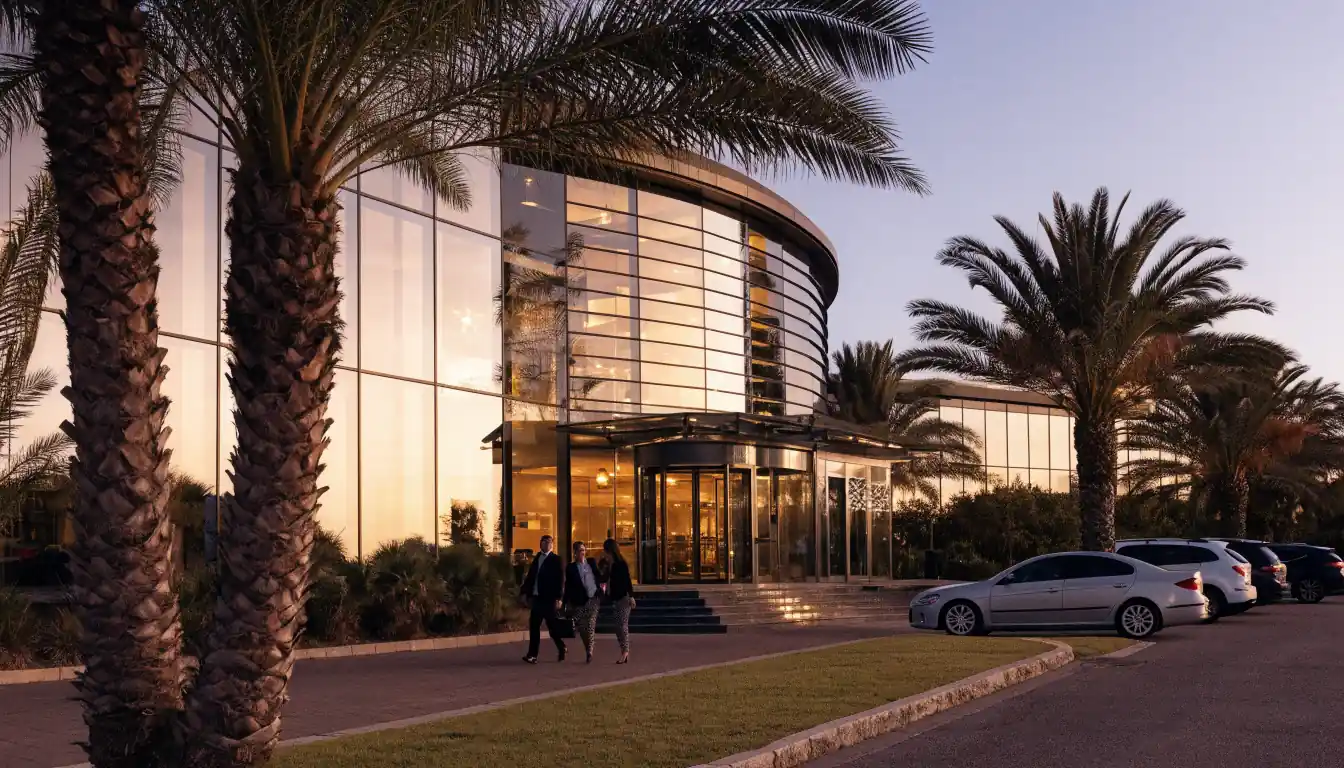
Accommodation may be within a casino complex, operated by the casino company, or simply located nearby, with booking responsibilities varying by property.
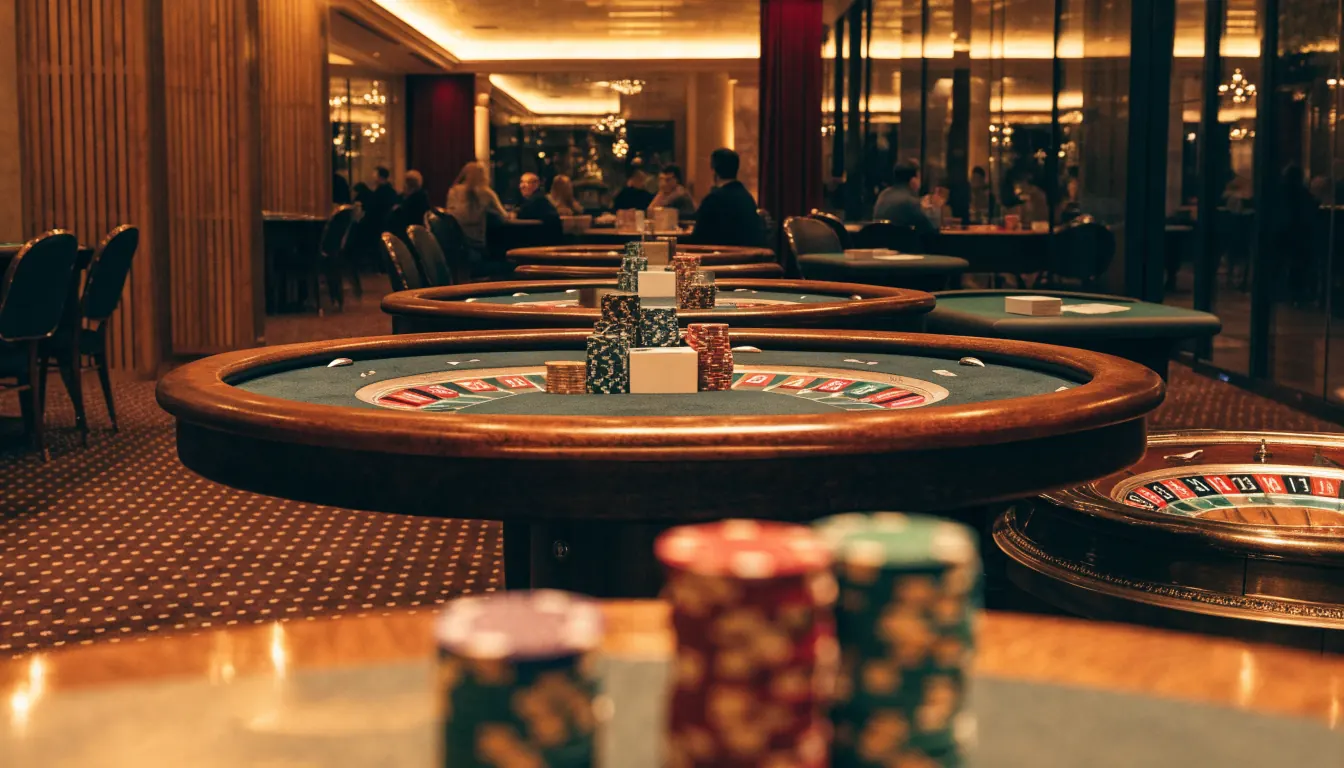
A casino hotel is more than a hotel mentioned alongside a casino. The term can describe accommodation within the same complex, a property operated by the casino company, or a separate hotel marketed as being close to a gaming venue. Those arrangements are not interchangeable. A Canberra hotel description would need to make clear which relationship applies before it could support claims about rooms, packages or shared facilities.
The wording “casino hotel” can also refer to a booking category rather than an official property name. A listing may group accommodation with nearby attractions, while the hotel itself remains independently operated. That distinction matters for reservations: room inventory, payment, cancellation terms and customer service may be handled by the hotel or by a third-party booking platform, not by a casino. A shared location or promotional mention alone does not establish common ownership or a combined booking.
Room details are similarly property-specific. Descriptions such as standard room, suite or accessible room are useful only when tied to an identifiable hotel and its current inventory. A general reference to a casino stay cannot establish room layouts, guest capacity, views, included services or availability on particular dates. These details can also vary within one property, so a broad label should not be treated as a complete description of what a booking includes.
Choosing an online casino to play from Canberra means weighing the details available for each operator, such as licensing, deposit minimums and payout information. This list offers a concise starting point for that comparison.
Kingmaker
Kingmaker lists a minimum deposit of A$30. Its stated payout times are around 90 minutes for crypto and 1–5 days for fiat.
LevelUp Casino
LevelUp Casino lists a minimum deposit of A$15 and a Curacao eGaming licence, OGL/2023/174/0082, held by Dama N.V.
SkyCrown
SkyCrown lists a Tobique Gaming Commission licence and a minimum deposit of A$30. Its stated payout times are around 10–15 minutes for crypto and 1–5 days for fiat.
Bizzo Casino
Bizzo Casino is listed with a Curacao Gaming Control Board licence held by TechSolutions Group N.V.
GoldenCrown
GoldenCrown is listed with a Curacao Gaming Control Board licence, OGL/2023/176/0095, held by Hollycorn N.V.
SpinsUp
SpinsUp is listed with a Curacao Gaming Control Board licence, OGL/2023/174/0082, held by Dama N.V.
Golden Pokies
The available detail for Golden Pokies is its Curacao licence.
Uptown Pokies
Uptown Pokies is listed as operating since 2017, with a Curacao licence and a minimum deposit of A$20.
Rollero Casino
Rollero Casino is listed with a Curacao Gaming Control Board licence, OGL/2023/176/0095, held by Hollycorn N.V.
MrPacho
MrPacho lists a minimum deposit of A$30. Its stated payout times are 30–120 minutes for crypto and 24–72 hours for fiat.
The same care applies to hotel deals. A package might combine accommodation with another service, or a discount might apply only under stated booking conditions. The phrase “casino hotel deal” by itself does not show what is included, which dates qualify, whether a minimum stay applies, or how cancellation is handled. Those terms belong to the individual offer and can change. Without a specific property and offer, there is no sound basis for describing a rate as discounted or presenting a package as available.
For a Canberra stay, the central question is therefore not simply whether a hotel appears in the same context as a casino. The relevant distinction is between a documented hotel-casino relationship and a separate accommodation option associated only by location or advertising. A property’s name, operator and booking terms would need to align before it could accurately be described as a casino hotel. Otherwise, the wording risks suggesting a connection that has not been established.
Searches for rooms or deals may reflect different practical needs: a room in a casino complex, a package connected to casino activity, or accommodation convenient to a planned visit. These intentions should not be collapsed into one claim. A property can be close to a venue without belonging to it, and a hotel can be associated with a venue without offering rooms through the venue’s booking system. Each description carries a different implication for what is included and who is responsible for the reservation.
For that reason, broad labels are less informative than property-level particulars. A reliable description of a stay would identify the hotel, state whether the casino and accommodation share an operator or premises, and set out the relevant room and booking conditions. Without those particulars, claims about Canberra casino hotel rooms or special deals would be more specific than the wording can support. The distinction is especially important where an advertised package could be mistaken for an official casino offer.
The phrase “hotel near a Canberra casino” also describes a different arrangement from an integrated casino hotel. It indicates proximity, not ownership, access, transport arrangements or a bundled rate. Even where a hotel and venue are both named, the relationship needs to be stated rather than inferred. This keeps room descriptions separate from assumptions about the venue and avoids treating a booking reference as proof of a shared operation.
Accordingly, a meaningful account of casino-related accommodation in Canberra depends on an identifiable property and explicit terms. Room categories, inclusions, rates and booking conditions cannot be inferred from the label alone. The distinction between a hotel that is part of a casino complex and one merely associated with a casino is the necessary starting point for describing any stay accurately.
Poker-room and poker-tournament listings describe a different activity from the Electronic Gaming Machines (EGMs) commonly called pokies in Australia. A poker room implies organised card play; a tournament additionally requires details such as its format, schedule and entry conditions. Those terms should not be treated as interchangeable with a general casino gaming area.
For Canberra, the distinction matters because the phrases “poker room” and “poker tournament” do not, by themselves, establish that a venue offers either. Nor do they establish a regular competition, its dates or whether it is open to casual participants. The same caution applies to gym searches: a request for a fitness facility does not establish that one forms part of a casino venue.
Poker-machine rules are also separate from the rules and arrangements that might apply to card games. In NSW, the legal age for gambling on poker machines is 18. NSW also requires pre-commitment systems in which players choose a loss limit before play. These are state-level details about poker-machine gambling, not confirmation of the facilities or operating conditions of a Canberra poker room. They should not be transferred to Canberra as if they described a local venue.
A sports bar is another distinct amenity. It might be associated with televised sport and food or drink service, but a search for one does not establish that a particular casino has such a bar, what it shows, or when it operates. Likewise, searches about whether a casino is open today or at a particular moment concern operating status, not poker-room access. Current hours would need to be checked against a venue’s own up-to-date notices; a general reference to poker or tournaments cannot answer that question.
It does not establish anything about poker facilities in Canberra, and the venue should not be presented as a local alternative. More broadly, a fact about one club cannot substantiate a claim about another city’s casino amenities.
This leaves a practical distinction between a feature label and a confirmed service. A poker room, tournament, gym or sports bar should be described as part of a Canberra venue only when venue-specific information supports that description. Without such confirmation, naming a schedule, facilities or access conditions would turn an unverified expectation into a factual claim. The legal age and pre-commitment details noted above remain relevant only within their stated NSW context.
A request about a casino in Canberra can point to several different kinds of information: whether a physical venue is intended, what games might be associated with it, or how to plan a visit. The wording alone does not identify a particular establishment. It is therefore important to distinguish a topic someone wants to investigate from a confirmed venue and its facilities.
Game-related terms such as baccarat and craps describe table games, but they do not establish that either is offered at a Canberra casino. The same distinction applies to broader references to casino games. In Australia, the Interactive Gambling Act restricts operators based in the country from providing online casino games such as pokies, blackjack and roulette. That rule concerns online services; it does not confirm the existence, games or operating arrangements of a physical venue in Canberra.
Questions about a bar, car park, map or contact details are practical rather than gaming-related. A bar search concerns food or drink facilities; a car-park search concerns access and parking arrangements; and a map or contact-number search seeks a way to locate or reach an establishment. None of those terms, by itself, verifies that the named amenity exists or supplies reliable directions or contact information. Details of this kind need to be tied to an identifiable venue before they can be treated as usable.
Concert-related wording also needs careful interpretation. It may refer to a request for entertainment listings at a casino, but it does not establish that concerts are held there. An event listing, where one exists, is distinct from a general description of a venue and should be checked for its own date, location and organiser. Without that identification, a concert search cannot be read as evidence of a scheduled performance.
The broader distinction between gambling products also matters. Sports betting remains widely accessible and legal in Australia, while online casino games fall under a different legal framework. The two should not be treated as interchangeable simply because both may appear in searches containing the word “casino”. Nor does the legal status of sports betting confirm anything about a Canberra venue or its facilities.
For practical research, the first task is to establish which venue, if any, a listing refers to. Only then can claims about its games, bar, parking, events or contact details be assessed against information specific to that establishment. Until that connection is clear, these subjects are best understood as separate information needs rather than as a verified description of one Canberra casino.
Online casino and bingo-related searches describe a different subject from a physical venue in Canberra. A phrase such as “Canberra casino online” can refer to an attempt to find internet gambling services associated with the city, but it does not establish that a local casino operates an online platform. Nor does it establish that an online service is lawful for use in Australia.
The Interactive Gambling Act 2001 prohibits operators based in Australia from providing real-money online casino games to people in the country. The prohibition covers casino-style services such as pokies and table games. An Australian-run operator therefore cannot lawfully offer these services to customers located in Australia. This is distinct from the rules for sports betting, which remains accessible under a different regulatory framework.
Offshore platforms occupy a different legal position. It is not technically illegal for an Australian player to use one, but such platforms are not regulated under Australian law. That distinction does not make them Australian-licensed services or provide the protections associated with local oversight. Offshore operators may be difficult to hold accountable through Australian channels, and dispute resolution can be limited. Winnings may also be at risk if an operator becomes insolvent.
Searches that mention bingo do not change this legal distinction. The word can refer to an in-person activity or an online service, and the wording alone does not establish which is intended. A bingo-related result should therefore not be assumed to be a Canberra casino facility or a lawful online offering. The same applies to searches combining online gambling with dining, parking or other venue terms: combining those subjects does not confirm that they belong to one verified business.
Access to games on offshore platforms can also vary by location. Online casinos may use a player’s IP address to identify their apparent country and block access from excluded regions. A game may be absent from a lobby or fail to load because of a regional restriction; these outcomes do not establish that a service is authorised in Australia. Some providers have also restricted particular games for Australian users, so availability can differ between platforms and change over time.
Using a VPN to get around a regional restriction may breach an operator’s terms of service and could lead to account suspension. It does not change the legal status of the service or provide the protections of Australian regulation. Offshore platforms may set withdrawal conditions, and some operators cap weekly withdrawals at AU$4,000, a restriction that can affect jackpot winners. Bonus offers can also carry wagering requirements, cashout limits or terms under which winnings may be voided.
For anyone considering gambling, losses should not be chased by raising stakes. A session budget should be set in advance and kept within the available bankroll; gambling should not be treated as a way to pay for essentials such as rent or groceries. These cautions do not alter the central distinction: a physical venue search and an online casino search concern separate services, and an offshore platform is not regulated under Australian law.
Accommodation described as “near a Canberra casino” depends first on a confirmed venue location. Without that point of reference, proximity cannot be assessed: a property’s position within Canberra does not, by itself, establish that it is close to a casino. The wording “Canberra casino accommodation” can also be read as a request for rooms connected with a casino, which is distinct from finding independent places to stay nearby.
A useful comparison would begin with the venue’s street address and the accommodation property’s address. Distance on a map is only one part of the assessment; the practical journey may depend on the route and the available transport. Until a casino location is established, claims that a hotel is within walking distance, a short drive or a convenient trip cannot be supported. A property’s description or a broad “nearby” label should not substitute for a measurable route.
Searches for accommodation deals may combine several different intentions: a reduced room rate, a package linked to a venue, or simply a lower-priced place to stay in the same area. Those are not interchangeable. A promotion attached to a hotel would need clear terms, including what is included and when it applies. A low room price alone does not demonstrate a connection to a casino or establish that the property is close to one.
The same separation matters when lodging is considered alongside casino location, parking, gaming-machine availability or operating times. These are separate details, and one cannot be inferred from another. A hotel listing does not confirm that a casino operates at the same address, while a parking reference does not establish the distance between a property and a venue. Accommodation comparisons should therefore avoid treating nearby amenities or venue-related wording as proof of a specific association.
For a sound comparison, the relevant details are the property’s actual address, the route to the intended destination, and the conditions attached to the room rate. Cancellation rules, extra charges and booking dates can affect the value of an offer, but they do not establish proximity. Likewise, a listing that uses the word “casino” may refer to a search category or a general description rather than a confirmed local venue.
Accordingly, “accommodation near a Canberra casino” is best treated as a location-dependent description, not as a verified category of local lodging. A specific recommendation would require a confirmed casino address and property details that can be compared against it.
Breakfast, buffet and resort wording describes different expectations from a casino’s gaming offer. A breakfast search may mean a morning meal at the venue, while a buffet search suggests a particular dining format; neither phrase establishes that a Canberra casino provides either service. “Resort” is broader still, and can imply a combined leisure property rather than a standalone casino. These labels should not be treated as confirmation of facilities or an operating business.
A useful distinction is between a venue’s own published information and a general description attached to it elsewhere. A dining claim is specific only when it identifies the relevant venue and gives current service details, such as the meal offered and when it is available. Without that context, “casino breakfast” or “casino buffet” may refer to a different property, an outdated listing or a general category. The same caution applies to resort language: the term alone does not establish that accommodation, dining and gaming are all part of one Canberra property.
Rewards searches raise a separate issue. A venue rewards programme, if one exists, would be a membership arrangement whose terms need to be documented by the operator. The word “rewards” by itself does not establish how membership works, what benefits are available, whether points are earned, or whether any offer applies to a particular venue. Promotional language found in general casino material should not be read as evidence of a Canberra-specific programme. In particular, terms associated with online pokie bonuses cannot establish the conditions of a land-based casino rewards scheme.
Employment searches likewise require a connection to an identifiable employer. A listing for casino jobs is meaningful only if it names the employing organisation, describes the position and gives a reliable application route. Search wording alone cannot establish that a Canberra casino is recruiting, what roles might be available, or whether a third-party listing is current. Employment information should therefore be assessed independently of assumptions about a venue’s dining, accommodation or gaming facilities.
The terms “casino jobs in Canberra” and “work at a Canberra casino” may also encompass different kinds of work: direct employment by a venue, contractor roles, or positions with a business located nearby. Those categories should not be conflated. A job advertisement’s location and employer matter more than a broad label, particularly where the venue itself is not clearly identified.
For breakfast, buffet, resort, rewards and employment information, the decisive evidence is venue-specific documentation rather than the wording of a listing. Until such documentation identifies the operator and the relevant service or vacancy, those terms remain descriptions of what someone is looking for, not confirmation that the offering exists in Canberra.
Whether a casino is open in Canberra is a question of present operating status, not merely of whether a venue has been proposed, discussed or associated with the city. These are different claims and require different evidence. A development announcement, planning reference or entertainment listing would not, by itself, establish that a casino has opened or is accepting visitors.
Terms like "concept," "proposal," "approval process," and "completed project" are not equivalent; a development reference may describe early planning rather than a finished facility.
Reopening language also needs a clear chronology. It can refer to a confirmed return after a temporary closure, a proposed opening date, or speculation about a future project. Without a dated statement from the operator or a relevant public authority, those meanings should not be treated as interchangeable. An old listing may remain visible after circumstances have changed, while a future date may describe an intention rather than an operating venue.
Event information has similar limits. A concert or entertainment notice needs to identify the organiser, venue and event date before it can support a claim about what is taking place in Canberra. A listing that names a casino without a clear connection to a Canberra venue does not establish that the event is held there. Nor does an event announcement confirm regular casino operations: one-off entertainment and a venue’s day-to-day status are separate matters.
Development references should be read with attention to their stage. A concept, proposal, approval process and completed project are not equivalent. The word “development” can describe early planning rather than construction or a finished facility. Claims about a Canberra casino project therefore need dated, attributable documentation that makes clear what has actually occurred, rather than relying on promotional wording or repeated descriptions.
Reviews require the same distinction between evidence and assertion. A review may describe a visitor’s experience at a particular time, but it cannot establish current opening status unless its date and subject are clear. A review referring to entertainment, a menu or other services should not be taken as proof that those details remain current. Menus in particular are time-sensitive, and a listing detached from a named venue and date cannot confirm what is presently available.
The relevant standard is specific and modest: operating claims need current confirmation tied to an identifiable venue; event claims need a dated event and location; and development claims need documentation that distinguishes a proposal from a completed outcome. Until those elements align, descriptions of a Canberra casino as open, reopening, hosting events or undergoing development remain unsubstantiated rather than established.
An address is a basic identifier, but it does not by itself establish that a casino operates at that location. A reliable venue listing would need to connect a named operator with a street address and make clear that the details apply to Canberra rather than to another Australian city. Search results that combine “casino” and “Canberra” are not sufficient evidence of a local venue.
The same distinction applies to practical amenities. A reference to bars would need to identify the venue and the offering before it could support a claim about what is available there. A spa or day spa is a separate facility, not an automatic feature of a casino. Neither a broad venue label nor a general description of casino amenities establishes that a particular bar or spa is present in Canberra.
Dress-code information is similarly venue-specific. Policies can depend on the operator, the area being entered and the occasion. Without an identified venue and a published policy, a general statement about formal, casual or themed dress would risk presenting an assumption as a local rule. The term “casino dress code” therefore has practical meaning only when tied to a particular establishment.
Games are another distinct point of reference. A mention of casino games does not establish a physical venue, its address or its facilities. In Australia, the Interactive Gambling Act 2001 prohibits operators from providing real-money online casino games to people in the country. That legal distinction matters when a result uses casino language but refers to an online service rather than a Canberra location.
Career listings also do not establish venue amenities or an address. A vacancy would need to identify the employer and workplace; employment information belongs to a separate question from whether a bar, spa or dress policy applies at a local casino.
For practical details to be meaningful, they must be attached to a clearly identified venue and relevant to the specific service being described. Without that connection, claims about an address, bars, spa facilities or dress expectations should not be treated as confirmed Canberra details.
A restaurant described as part of a Canberra casino would have a direct connection to the venue, rather than simply being a dining business in the same suburb or city. That distinction matters because “at the casino” and “near the casino” describe different relationships. A nearby restaurant may be independently operated, with no shared ownership, facilities or booking arrangements.
The association is clearest when a venue’s own directory identifies a restaurant as part of its premises, or when the restaurant’s official information gives the casino as its location. A business listing or map pin can help establish where a restaurant is, but location alone does not show that it is casino-operated or included in a casino complex. The same care applies to third-party dining pages, which may group businesses by area without establishing any formal connection.
Restaurant names, menus and service details are also time-sensitive. A listing may refer to a past operation, a temporary service or a business with changed hours. Current information is best distinguished from older references by comparing the restaurant’s own published details with the venue’s current directory. Menu descriptions should be attributed to the restaurant that publishes them; they should not be treated as evidence of a broader casino dining offer.
The distinction between a casino restaurant and a general Canberra restaurant is especially important when a business appears in results for both. A restaurant’s presence in the city does not establish that it is inside a casino, while a casino-related label does not by itself confirm an operating restaurant. The same principle applies to rooftop dining: the words “rooftop bar” describe a type of venue, not proof that a casino has one or that it serves restaurant meals.
For someone researching restaurants associated with a Canberra casino, the useful details are therefore specific: the stated relationship to the venue, the restaurant’s current identity, its published menu and its operating information. These details should be kept separate from accommodation, general food services and other amenities. A restaurant listing can establish a dining option; it cannot, on its own, establish the scale or full range of facilities at a casino.
This approach also avoids treating broad labels such as “casino restaurant” as interchangeable with restaurants across Canberra. Where a direct association is stated, it can be described precisely. Where only proximity is indicated, the business is more accurately characterised as nearby rather than as part of the casino.
Food-court and pool facilities are distinct from restaurants, bars and accommodation. A food court would imply a shared area with several food outlets, while a pool would be a separate recreational amenity; neither can be inferred simply from the use of the word “casino” in a venue description.
The distinction matters because a broad reference to food does not establish the format, availability or location of dining. Likewise, a pool may belong to a hotel or leisure complex rather than a casino itself.
There is also a difference between a physical venue and online gambling services. In Australia, the Interactive Gambling Act 2001 prohibits operators from providing real-money online casino games, including pokies and table games, to people located in the country. That legal position does not establish anything about the food or leisure facilities of a Canberra property; those are venue-specific matters.
Accordingly, food-court and pool descriptions should be treated as practical facility information, not assumed features of a casino.
Pokies region blocking uses a player’s IP address to identify their location and restrict access to games in countries excluded by the casino or software provider. Blocked games may not appear in the lobby or may fail to load.
You must be at least 18 to gamble on poker machines in NSW.
Examples include NetEnt wide-area progressive jackpot games such as Mega Fortune and Hall of Gods, which were blocked from Australia in 2016. NYX Gaming/Next Gen titles including Foxin’ Wins and Doctor Love were also region-blocked.
Created by the ”Rollxo Casino” editorial team.