Room offers, booking conditions and practical venue details help frame a Melbourne casino visit.
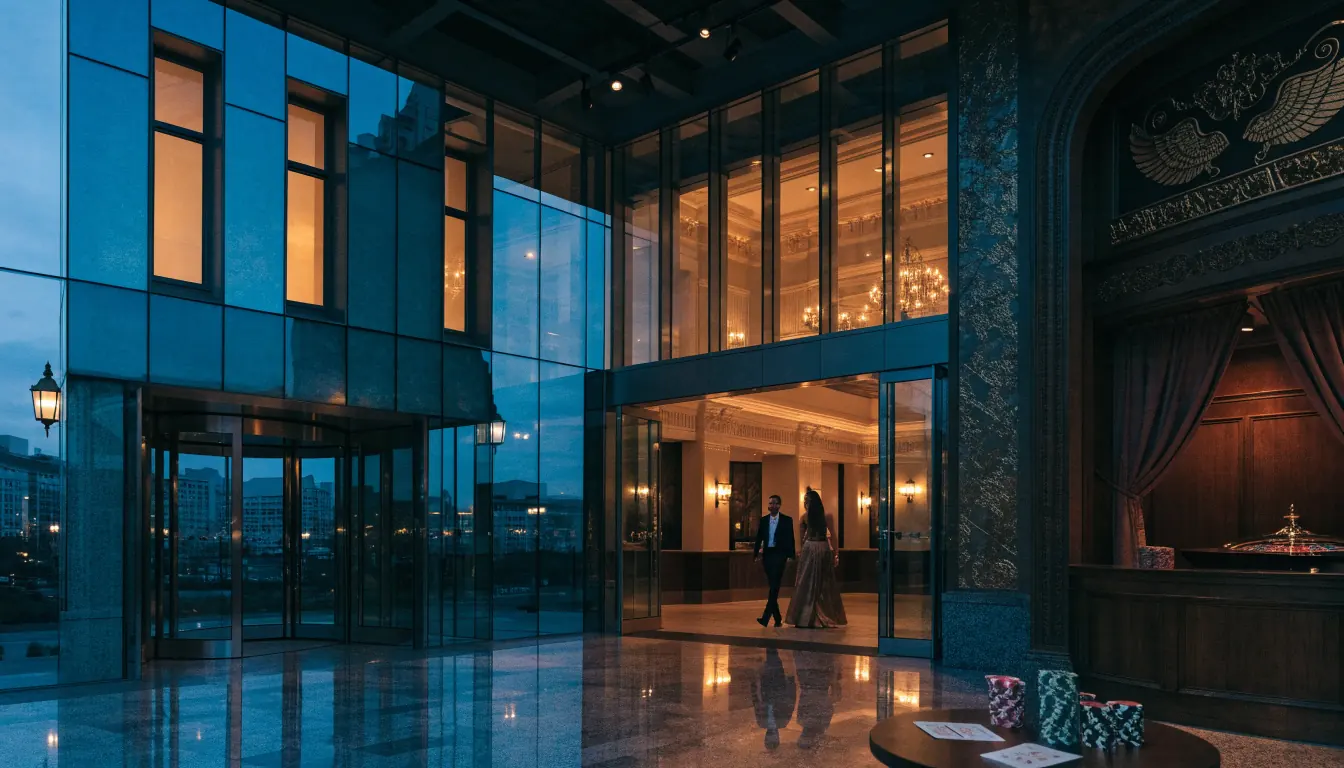
A casino-branded stay and a hotel booking made alongside a casino visit are not necessarily the same product. The first implies an accommodation offer linked to the venue or its operator; the second may simply combine separate choices. That distinction matters when comparing room rates or packages, because a casino reference in an offer’s description does not, by itself, establish which business provides the room or what the booking includes.
A useful comparison begins with the terms attached to the specific stay. The accommodation provider, room category, dates covered and price basis should be clear before an offer is treated as a hotel deal. Package language can also leave important details ambiguous: a stated rate may apply only to a particular room or booking period, while other inclusions may depend on conditions set out separately. The description and the booking terms therefore need to be read together.
The room itself is only one part of the decision. Conditions for changing or cancelling a reservation, payment timing and any restrictions on the offer can affect its practical value. A lower advertised rate is not necessarily the less costly or more suitable option if it comes with terms that do not fit the planned stay. Comparisons are most meaningful when the same dates and broadly equivalent room arrangements are used, rather than when headline prices are considered in isolation.
Choosing an online casino to play from Melbourne calls for a careful look at the details available for each option. This list offers a concise starting point, with each verdict limited to the stated information.
Kingmaker
Kingmaker lists a A$30 minimum deposit. Its stated payout times are around 90 minutes for crypto and 1–5 days for fiat.
LevelUp Casino
LevelUp Casino lists a A$15 minimum deposit and a Curacao eGaming OGL/2023/174/0082 license held by Dama N.V.
SkyCrown
SkyCrown lists a Tobique Gaming Commission license and a A$30 minimum deposit. Its stated payout times are around 10–15 minutes for crypto and 1–5 days for fiat.
Bizzo Casino
Bizzo Casino is listed with a Curacao Gaming Control Board license, with TechSolutions Group N.V. named in connection with it.
GoldenCrown
GoldenCrown is listed with Curacao Gaming Control Board license OGL/2023/176/0095, held by Hollycorn N.V.
SpinsUp
SpinsUp is listed with Curacao Gaming Control Board license OGL/2023/174/0082, held by Dama N.V.
Golden Pokies
The available licensing information for Golden Pokies identifies Curacao.
Uptown Pokies
Uptown Pokies is listed with a Curacao license and has been operating since 2017. Its minimum deposit is A$20.
Rollero Casino
Rollero Casino is listed with Curacao Gaming Control Board license OGL/2023/176/0095, held by Hollycorn N.V.
MrPacho
MrPacho lists a A$30 minimum deposit. Its stated payout times are 30–120 minutes for crypto and 24–72 hours for fiat.
A casino hotel search can also blur the line between accommodation and gaming access. A room booking does not, by itself, establish that casino entry, dining, entertainment or other services are included. Any such inclusion should be expressly stated in the offer, with its relevant conditions. Conversely, a casino-related label should not be read as evidence that a hotel stay is required to visit a casino venue.
For Melbourne, the phrase “casino hotel” can refer to different kinds of arrangements: a hotel identified with a casino, a package associated with a venue, or an ordinary room selected because it suits a casino visit. Those descriptions should not be treated as interchangeable. The provider named in the reservation and the terms governing the stay are more informative than the general label used to promote it.
Room comparisons are also time-sensitive. Availability and advertised terms can vary with selected dates and booking conditions, so a price seen at one point should not be assumed to apply to another stay. Where a package is presented as a special deal, its value depends on the stated inclusions and restrictions, not on the promotional wording alone. A clear breakdown of the room and any extras makes it easier to distinguish a substantive benefit from a label.
The most reliable basis for describing a stay is the booking information for the exact dates and room being considered. That keeps claims about hotel rooms, packages and casino links tied to the actual offer rather than inferred from the venue’s name. It also prevents a broad search phrase from being mistaken for confirmation of a particular hotel arrangement.
A Melbourne casino poker room and a scheduled tournament are specific venue claims. Without reliable confirmation of the room’s operation, formats or current event calendar, none can be presented as established. The same caution applies to claims about cash games, registration arrangements, prize structures and player capacity. A general reference to poker at a casino does not confirm that a particular venue runs poker.
Poker can also refer to different activities. Live poker at a physical venue is not the same service as real-money poker supplied online. Under the Interactive Gambling Act 2001, operators may not provide real-money online casino games, including poker, to people located in Australia. That legal restriction concerns online provision; it does not, by itself, establish whether a particular Melbourne venue has a live poker room or hosts tournaments. Neither should be inferred from the other.
Tournament information is time-sensitive. A listing would need to identify the event date and venue, and distinguish a confirmed tournament from a general poker promotion or an outdated calendar entry. Details such as the game format, entry conditions, registration status and prize terms also need to be tied to the specific event. Without those particulars, a tournament name or schedule would risk implying that players can attend an event that may not exist or may no longer be current.
The phrase “casino rooms” can refer to hotel accommodation rather than poker facilities. Likewise, a sports bar is a separate venue feature: its presence, opening status and relationship to poker cannot be established from a poker-room reference. These categories should not be treated as evidence for one another. Questions about whether a venue is open today or at a particular time also require current operating information, which should not be inferred from an old event listing.
For a reliable account of poker at a Melbourne casino, the relevant evidence would be a current venue announcement or event listing that identifies the location and event details. A third-party calendar, an undated promotional page or a general description of casino poker is not enough to establish a present tournament schedule. Where such confirmation is unavailable, the responsible conclusion is limited: the existence of a specific poker room, its current operation and any tournament dates remain unconfirmed.
That distinction matters because an inaccurate schedule can affect practical decisions, while unsupported statements about a poker room can create a misleading impression of the venue’s facilities. A venue-specific claim should therefore be kept separate from general descriptions of poker and from information about online gambling. No tournament date, room arrangement or sports-bar service should be treated as confirmed unless it is attached to current, identifiable venue information.
Travel arrangements for a casino visit depend on the venue’s current access information, rather than on assumptions drawn from search listings or older visitor accounts. Parking, valet service, complimentary parking and public-transport access are separate arrangements; the presence of one does not establish the availability of another. A listing that mentions parking, for instance, may refer to nearby public parking rather than spaces operated by the venue.
For a visit to a casino in Melbourne, the distinction matters when estimating the practical journey. On-site parking, if offered, may have different entry points, operating conditions or charges from a separate car park nearby. Valet parking is a separate service and should not be inferred from a general reference to vehicle access. Likewise, “free parking” can depend on conditions, and should not be treated as a general feature without current, venue-specific confirmation.
Information can change, so older posts and third-party directory entries may not reflect present arrangements. Before setting out, the most useful details to confirm are the car-park location, access route, current charges and any conditions attached to complimentary or valet parking. For public transport, the relevant checks are the route, service status and distance between the stop and the entrance. These are practical checks for any destination; they do not establish which services a particular casino provides.
Accessibility also requires specific information. A general statement that a venue is accessible does not necessarily describe the route from a parking area, step-free entrance or accessible spaces. Where those details affect a journey, they need to be checked individually rather than inferred from a broad description. The same principle applies to drop-off points: a convenient place to stop should not be assumed to be an authorised passenger area.
The phrase “best casino in Melbourne” does not, by itself, answer these transport questions. A venue’s gaming reputation and its parking arrangements are different considerations. Nor should dining or bingo listings be taken as evidence of particular access services. For planning purposes, the relevant information is the current arrangement for the specific destination and the intended mode of travel.
Online results can also blur the distinction between a physical casino and an online casino serving people in Melbourne. That distinction has legal significance in Australia. Under the Interactive Gambling Act 2001, operators must not provide real-money online casino games, including pokies, poker, blackjack and roulette, to people physically located in Australia. An online casino listing is therefore not a lawful substitute for directions to a land-based venue, and it should not be treated as an Australian-authorised gaming service.
Travel planning should remain separate from online gambling claims. In particular, descriptions of an online casino as “Melbourne-based” do not establish that it is authorised to provide real-money casino games in Australia. A physical visit and an online gambling service are not interchangeable, and search results may use similar wording for both.
For parking-related decisions, the soundest basis is current, venue-specific access information, not an assumption that a casino offers free spaces, valet service or a particular transport connection. This keeps the journey plan grounded in arrangements that can actually be confirmed.
Accommodation described as being near a casino can refer to properties with very different relationships to the venue. A hotel may be independently operated, part of a larger complex, or simply located within the same broad district. Those distinctions matter: proximity alone does not establish that a property is affiliated with a casino or that a stay includes access to venue services.
For a useful comparison, the property’s address and the route to the intended destination need to be considered together. A straight-line distance can differ from the distance travelled on foot or by road, while the practical journey may depend on entrances and the route available at the time. Listings that say “close to” without specifying a location or route provide limited evidence for planning a stay.
Accommodation deals also need to be assessed as lodging offers, not assumed to include casino benefits. The advertised rate, included services, cancellation conditions and any restrictions should be read as part of the same offer. A promotional label by itself does not establish what is included, whether the price applies to the required dates or whether separate charges may apply. These points should be confirmed with the accommodation provider before a booking is made.
The phrase “Melbourne casino accommodation” can also blur two separate choices: staying at a casino hotel and booking an independent property nearby. The former concerns rooms operated as part of a venue; the latter concerns lodging selected for its location. A nearby property should not be described as a casino hotel unless that relationship is clearly established. Likewise, a stay near a gaming venue does not establish that gaming machines, poker machines or other casino facilities are available at the accommodation itself.
Promotions require particular care where the wording combines a room offer with gambling. A lodging discount and an inducement to gamble are not interchangeable. In Australia, the Interactive Gambling Act 2001 makes it illegal for operators to provide real-money online casino games, including slots and table games, to people physically located in the country. Online casino-style services should not be treated as a lawful substitute for visiting a land-based venue, and promotional language should not imply otherwise.
Opening times and trading hours are separate from accommodation availability. A room booking does not, on its own, establish when a casino or any facility within it is open. Those details must be checked with the relevant venue, while check-in and check-out conditions belong to the accommodation provider. The same distinction applies to parking: a nearby stay does not prove that parking is included, available or connected to the casino.
A sound comparison therefore rests on verifiable property details rather than proximity labels or promotional wording. The address, booking conditions, included services and relationship—if any—between the accommodation and the casino should each be considered separately. This keeps lodging claims distinct from claims about venue access, gaming facilities and operating hours.
Enquiries about a Melbourne casino can concern different things: whether a venue provides a particular table game, whether a bar is operating, or where a service is located. These are venue-specific questions, and a general label such as “casino” does not establish that any particular facility or game is available. Baccarat and craps, for example, are distinct table games; their presence should not be inferred from the wording of a venue listing or a general description.
The same distinction applies to searches for a contact number, a map or a car park. A map pin may identify a location without confirming that it is the official venue listing, while a phone number shown on an unrelated directory may not be an official enquiry line. Details can also change. For matters requiring a current answer, the relevant source is the venue’s own published information, where available. A third-party listing should be treated as a lead rather than confirmation.
A concise enquiry is more useful when it identifies the subject clearly. For a question about baccarat or craps, the point to establish is whether the game is offered at the relevant venue and under what conditions. For a bar, the question is whether it is part of that venue and whether it is operating at the intended time. A general reference to “the casino” may not distinguish between a venue, a gaming area and an individual service.
Questions about concerts also require care: a venue’s identity alone does not verify a particular performance or event. Event details should be checked against information issued by the organiser or venue, rather than inferred from an old listing.
A physical venue enquiry should not be confused with access to online casino games. Under the Interactive Gambling Act 2001, operators may not provide real-money online casino games—including slots, poker, blackjack and roulette—to people located in Australia. This restriction concerns the operator’s provision of the service; it does not make an offshore website an authorised Australian casino.
Offshore gambling platforms may be accessible in some circumstances, but they are not regulated under Australian law, and access can be restricted. Online operators or game providers can use a player’s IP address to identify a geographic location and block access from excluded countries. A game absent from a lobby, or one that fails to load, may therefore reflect a regional restriction rather than a technical fault.
A venue’s contact details, where published, relate to enquiries about that venue; they do not establish that an online casino service is lawful in Australia. Nor does the presence of familiar game names or gambling terminology in a listing prove that those games are available at a Melbourne venue. Keeping these categories separate avoids treating a venue enquiry as confirmation of online access, game availability or an official contact channel.
Breakfast and buffet searches can describe different expectations. A breakfast request may concern a morning meal, while a buffet search implies a particular style of service. Neither term alone establishes that a venue serves breakfast, operates a buffet, or includes either option in a resort stay. A resort label is also not proof of a particular dining arrangement: accommodation, food service and other facilities are separate matters.
For a useful comparison, dining details should be checked against current information issued by the venue or the relevant food operator. The important points are whether breakfast is served, whether the format is buffet or table service, which days and service periods apply, and whether reservations or separate payment are required. Menus and operating arrangements can change, so older descriptions may not reflect present service. A buffet should not be assumed to be available simply because a venue is associated with a casino or resort.
The distinction also matters when planning a visit. A casino visit does not, by itself, establish access to a hotel breakfast or any other dining service. Likewise, a mention of breakfast does not establish that a buffet is offered. Checking the service description and its conditions avoids treating these as interchangeable arrangements. Prices, inclusions and booking conditions should be taken from the current venue information rather than inferred from the word “resort” or from a general description of the property.
Employment searches raise a separate issue. A job associated with a casino property may belong to different parts of its operation, such as hospitality, gaming, administration or facilities, but no particular role or vacancy can be inferred from the venue name alone. Current openings should be assessed through the employer’s own recruitment information, where the employing entity, duties, work location and application process can be identified. A search result or third-party listing may be outdated, so the status of a position should be confirmed before an application is prepared.
Applicants can also distinguish direct employment from work offered by a contractor or another business operating at the property. The organisation named in the listing, rather than the location alone, determines who is recruiting. Role descriptions and eligibility requirements should be read individually; requirements for one position cannot be assumed to apply to another. No particular vacancy, salary, hiring timetable or staff benefit follows from a general reference to casino employment.
The phrases “casino resort” and “casino jobs” therefore do not settle practical questions about dining or recruitment. For breakfast and buffet arrangements, the decisive information is the current service description and its conditions. For employment, it is the current listing and the identity of the employer. Keeping those matters separate prevents an assumption about resort facilities from being mistaken for a dining offer, or a reference to casino work from being mistaken for a confirmed vacancy.
Opening status, event programming and entertainment are time-sensitive subjects. A past listing or an undated review cannot establish whether a venue is open now, whether an event is still scheduled, or whether a development proposal has progressed. These claims are best treated separately: operating hours describe access, event notices describe particular activities, and development announcements concern changes that may take place over a longer period.
A reliable account of an opening or reopening needs a date and a clear indication of what has changed. “Open” may refer to a venue’s general operation, a particular area or a one-off event; those meanings should not be treated as interchangeable. Likewise, a reopening notice can refer to a temporary closure ending rather than a broader change in services. Without those distinctions, brief headlines and copied listings can give an incomplete impression of the situation.
Event information also needs to be read in context. A listing should identify the activity and its scheduled date, and later updates should be checked for changes or cancellation. A calendar entry is evidence of an announced event, not proof that it went ahead. Reviews written after an event may describe a past experience but do not establish a recurring programme or a current entertainment schedule.
Development claims require similar care. An announcement, proposal or construction reference does not by itself confirm completion, a reopening date or a change to public access. The status of a project can change between announcement and delivery; descriptions should make clear whether they concern a proposal, work in progress or a completed change. This is particularly important when older coverage continues to circulate alongside newer notices.
The phrase “best casino in Melbourne 2026” can also blur two different questions: whether a venue is currently operating and how its overall experience should be assessed. A review of entertainment is stronger when it identifies the period covered and separates confirmed event details from general impressions. A single review cannot establish current hours or guarantee that a past programme remains available.
The legal context matters when online casino services are discussed alongside a physical venue. Under the Interactive Gambling Act 2001, operators may not provide real-money online casino games—including slots, poker and table games—to people located in Australia. That restriction concerns online services; it should not be used as evidence about the opening hours or event schedule of a land-based venue. Similarly, a website being accessible does not establish that an associated physical venue is open.
For current decisions, dated venue announcements and event updates are more informative than undated summaries or recycled listings. Claims about opening, reopening, entertainment and development should be tied to the specific date and status they describe, rather than presented as enduring features.
Restaurant information associated with a casino needs to be read as venue information, not as evidence about gambling products or the quality of the casino itself. A restaurant’s name, location within a complex, menu and current operating status are separate details; one does not establish the others. This distinction matters when comparing dining options connected with a Melbourne casino or looking for restaurants in the surrounding area.
Listings can also use “casino restaurant” in different ways. The phrase may refer to a dining venue inside a casino complex, a restaurant nearby, or a business that appears in a broader local search. Those categories are not interchangeable. A venue described as near a casino should not automatically be treated as part of it, and an address associated with a large complex does not, by itself, establish where a restaurant sits within that site.
For a reliable comparison, restaurant-specific information should be considered together: the business’s current name, its precise location, the date the listing was checked, and whether the menu or booking information belongs to that same venue. Reviews can offer evidence about individual visits, but they may refer to an earlier menu, a different service period or a business whose details have since changed. A rating alone cannot confirm the restaurant’s present offering.
The term “Melbourne casino restaurants” can also imply a single set of dining options when the relevant locations may be distinct businesses. Separating each restaurant by its own identity avoids attributing one venue’s menu, reviews or service arrangements to another. It also prevents nearby restaurants from being presented as casino-operated without evidence of that connection.
Dining claims should remain distinct from claims about gaming. Restaurant availability does not establish the legal status of gambling services. Under the Interactive Gambling Act 2001, operators cannot provide real-money online casino games to people physically located in Australia. That legal restriction concerns online gambling services; it does not, on its own, establish details about restaurants at a land-based venue.
A sound account of dining at a Melbourne casino therefore depends on specific, current restaurant-level information. Broad labels such as “casino dining” are not a substitute for identifying the business and confirming that the relevant details belong to it. Until those distinctions are clear, restaurant comparisons should avoid presenting menus, prices, booking arrangements or venue affiliations as settled facts.
Spa services, bars, dress expectations, games and employment information are separate aspects of a casino venue and should be checked independently. A listing for a day spa, for instance, does not establish what treatments are offered, whether appointments are available or whether the facility is part of the casino itself. Those details can change, so current venue information is more reliable than an undated directory entry.
Verify specific treatments and appointment availability via current venue information.
Check official venue notices for entry conditions and etiquette requirements.
Use the employer's own careers channel for current vacancies and eligibility.
The same caution applies to an address. A search result may refer to a casino, a hotel, a nearby business or a different venue altogether. Before relying on an address for a booking or other arrangements, it is sensible to confirm that it appears on the venue’s official website or in its own current communications. The name of a Melbourne casino alone is not enough to establish the location of a particular service.
Dress requirements and bar information are also venue-specific. A general description of casino etiquette cannot establish a particular property’s entry conditions, and a bar listing cannot confirm current service arrangements. Official venue notices are the appropriate place to check those points. Employment information should likewise be taken from the employer’s own careers channel rather than assumed from third-party listings, which may be out of date.
The term “casino games” can refer to games at a physical venue or to online gambling. The legal position differs by setting. Under the Interactive Gambling Act 2001, operators may not provide real-money online casino games—including slots, poker, blackjack and roulette—to people located in Australia. This prohibition concerns the online service; it does not establish details about games or facilities at a particular Melbourne venue. Sports betting is treated separately and remains widely accessible and legal in Australia.
For online gambling, an offshore platform’s availability does not mean it is regulated under Australian law. Offshore services occupy a legal grey area for players, while operators are prohibited from supplying these casino services to customers in Australia. This distinction matters when “casino games” appears alongside searches for physical venue facilities: the phrase alone does not identify which setting is meant.
No particular spa, bar, dress code, careers channel, address or range of games should be inferred from a broad venue description. For decisions that depend on current arrangements, the relevant detail is the one confirmed directly by the venue, not one extrapolated from another casino or from general descriptions of the industry.
Food and pool facilities are separate considerations when assessing a casino venue. A reference to food may describe anything from a full-service dining room to a casual counter or shared food area; the label alone does not establish which format is present. Likewise, a pool may be part of a hotel or leisure complex rather than an amenity available to every casino visitor. These distinctions matter when comparing venues or planning a visit.
Descriptions are most useful when they identify the facility, its location within the complex, access conditions and current operating status. A food-court listing, for instance, should be distinguished from information about individual restaurants. Restaurant-specific options are a separate subject. For a pool, relevant details include whether it is open to day visitors or reserved for accommodation guests, and whether access is subject to separate conditions. Such terms should be checked against current venue information rather than inferred from a general property description.
Food and leisure facilities can also change independently of a casino’s gaming operations. A venue name or an old listing is therefore not, by itself, evidence that a particular dining area or pool is currently operating. Where a facility is important to a visit, the precise amenity and its access arrangements are more informative than broad promotional wording.
The distinction between a physical venue and online gambling is also material in Australia. Under the Interactive Gambling Act 2001, operators may not provide real-money online casino games, including slots, poker and table games, to people located in Australia. That legal position concerns online services; it does not establish what food or leisure amenities a Melbourne venue offers.
A reliable comparison keeps dining format, pool access and gaming services as separate questions. It avoids treating a general casino description as proof of specific facilities, and it makes clear which details apply to the wider complex rather than to the casino itself.
Pokies region blocking uses your IP address to estimate your location and restrict access to games or providers in certain countries. A blocked game may not appear in the lobby or may fail to load.
A VPN can make your digital location appear to be in another country, but a casino or game provider may still restrict access based on its licensing requirements.
Each online pokie uses a Random Number Generator, so every spin is independent and earlier results do not affect later ones. RTP is the theoretical share of wagers paid back over a very large number of spins.
Prepared by the Rollxo Casino editorial staff.